
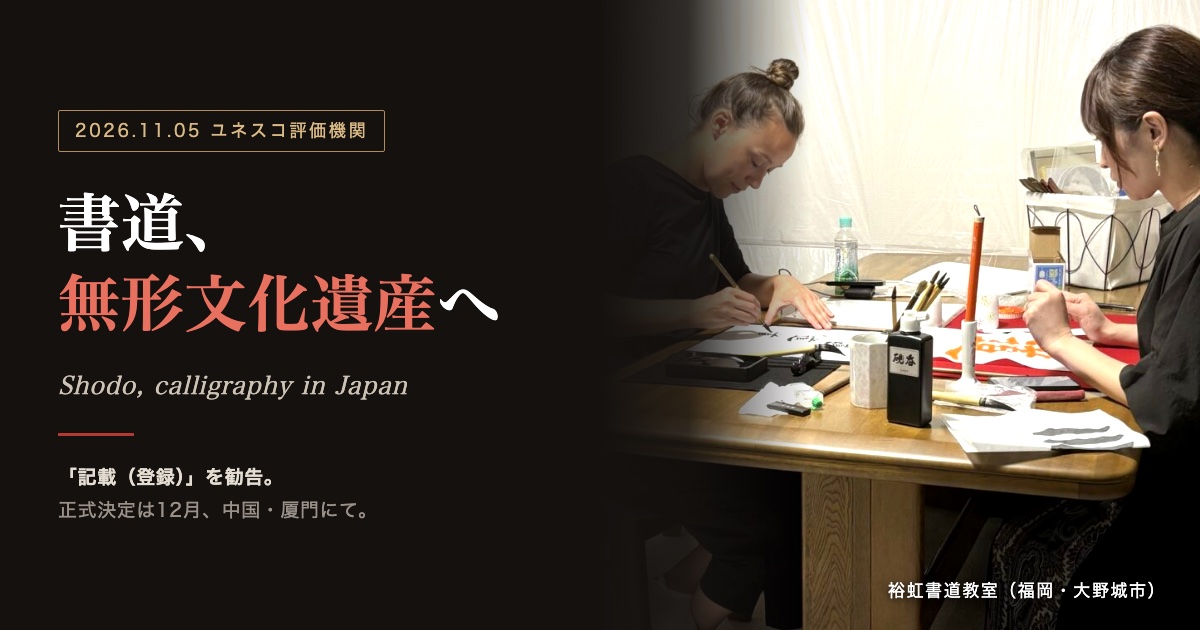
2026年11月5日、ユネスコの評価機関が、日本の「書道」を無形文化遺産に「記載(登録)」するよう勧告しました。正式な決定は、11月30日から中国・厦門(アモイ)で開かれる第21回政府間委員会で、12月1日〜3日の間に行われる予定です。
On 5 November 2026, UNESCO’s Evaluation Body recommended that Shodo — Japanese calligraphy — be inscribed on the Representative List of the Intangible Cultural Heritage of Humanity. The final decision is expected between 1 and 3 December 2026, at the 21st session of the Intergovernmental Committee in Xiamen, China.
この記事では、文化庁の報道発表とユネスコの一次資料にあたって、何が決まり、何がまだ決まっていないのかを整理します。そのうえで、ほとんど報じられていない一文——ユネスコが書道の担い手として「教える人」と「学ぶ人」を名指しで挙げていることについてお話しします。福岡県大野城市の書道教室からの記事です。
Drawing on the original UNESCO working document and the announcement by Japan’s Agency for Cultural Affairs, this article sets out what has actually been decided and what has not. It then looks at one line in the nomination that has received almost no coverage: among the bearers of shodo, UNESCO names the instructors who teach it and the students who learn from them. Written by a calligraphy school in Onojo City, Fukuoka.
「登録決定」ではなく「登録勧告」ですWhat was decided on 5 November — and what was not
はじめに、いちばん間違えやすいところを確認します。11月5日に出たのは評価機関による「勧告」であり、登録そのものはまだ決まっていません。最終的に決めるのは、各国の代表で構成される政府間委員会です。
The most common misunderstanding first: what happened on 5 November was a recommendation by the Evaluation Body. The inscription itself has not yet been decided. The final decision rests with the Intergovernmental Committee, made up of representatives of the States Parties.
| 提案の名称 | Shodo, calligraphy in Japan(提案番号 No. 02263)The official nomination title in English. In Japanese it is simply 「書道」. |
|---|---|
| 勧告の日 | 2026年11月5日5 November 2026 |
| 勧告の内容 | 「記載(Inscribe)」=代表一覧表に登録することが適当The Evaluation Body’s recommendation was “inscribe” — the highest of its three categories. |
| 決めるのは | 第21回政府間委員会(2026年11月30日〜12月5日・中国 厦門)21st session of the Intergovernmental Committee, Xiamen, China |
| 正式決定の予定 | 2026年12月1日〜3日Expected between 1 and 3 December 2026 |
| 登録されれば | 日本で24件目の無形文化遺産Japan’s 24th element on the Representative List, if approved |
用語について|A note on wording
ニュースでは「登録」と報じられますが、公式文書の用語は「記載(Inscribe)」です。評価機関の勧告には「記載」「情報照会」「不記載」の3区分があり、今回は最上位の「記載」でした。ただし決定権は政府間委員会にあるため、12月の決定までは「登録される見通し」という書き方が正確です。
Japanese media use the word 「登録」 (registration), but the official term is “inscription”. The Evaluation Body has three categories — inscribe, refer, and not to inscribe — and shodo received the highest. Until the Committee decides in December, the accurate phrasing is “expected to be inscribed”.
ここまでの経緯|How it got here
- 2021年12月 / December 2021 日本の無形文化遺産の目録に記載 文化庁が管理する目録に「書道」が記載されました。これは提案の前提条件(基準R.5)にあたります。 Shodo was included in Japan’s national inventory of intangible cultural heritage, maintained by the Agency for Cultural Affairs — a prerequisite for nomination (criterion R.5).
- 2024年3月 / March 2024 ユネスコへ提案書を提出 日本政府が「書道」の提案書を提出しました。 The Japanese government submitted the nomination file for shodo.
- 2025年3月 / March 2025 審査が回ってこず、提案書を再提出 日本はすでに登録件数が多く、新規の提案が審査される回数が限られています。そのため一度は審査に進まず、あらためて提出し直すことになりました。 Because Japan already has a large number of inscribed elements, new nominations from Japan are examined only infrequently. The file was not taken up in the previous cycle, so the government resubmitted it.
- 2026年11月5日 / 5 November 2026 評価機関が「記載」を勧告 ← いまここ 評価機関は、5つの登録基準をすべて満たしていると評価しました。 The Evaluation Body found that the nomination satisfies all five criteria for inscription, and recommended “inscribe”. This is where we are now.
- 2026年12月1日〜3日 / 1–3 December 2026 政府間委員会で正式決定の予定 中国・厦門で開かれる第21回政府間委員会で、正式に決まる見通しです。 The 21st session of the Intergovernmental Committee in Xiamen, China, is expected to make the final decision.
ユネスコは「書道」をどう説明したかHow UNESCO describes shodo
提案を審査した評価機関の報告書には、書道が次のように説明されています。日本語訳は当教室によるものです。
The working document of the Evaluation Body describes shodo as follows. The passage below is quoted from the original English text.
書道とは、漢字、かな、またはその両方を、伝統的な筆づかいによって紙に手書きする行為である。この書の技術は、印を彫るための図案を作る際にも用いられる。書道は、書き初め(新年の抱負や目標、祈りを紙に書く行事)のような機会のほか、手紙を書く、芳名帳に記帳する、新生児の命名書を作るといった場面でも用いられる。担い手には、伝統的な技術を修めた実践者、書道を教える指導者とその生徒、そして道具(筆・墨・硯・紙)を作る人びとが含まれる。
“Shodo is the act of handwriting words in Kanji (Chinese characters), Kana (Japanese syllabic writing), or both, using traditional brushstrokes on paper. The calligraphy technique is also used to create designs for engraving seals. Shodo is used for events such as Kakizome (a ceremony in which people write their New Year’s resolutions, goals and prayers on paper) as well as for writing letters, signing guestbooks, or creating name certificates for newborns. The bearers include practitioners who have mastered the traditional technique, instructors who teach Shodo, their students, and the people who produce the tools (brushes, ink, ink stones and paper).“
出典:UNESCO, LHE/26/21.COM/7.b, Draft Decision 21.COM 7.b.8書道 / Shodo, calligraphy in Japan
筆づかいによって紙に手書きする行為
Handwriting with traditional brushstrokes
▲ ユネスコの説明にそって整理した「書道」の範囲。漢字だけでなく「かな」が明記され、篆刻(印の図案)の技術も含めて説明されています。
注目したいのは3点です。ひとつは「かな」がはっきり書かれていること。ふたつめは印を彫る図案=篆刻の技術にも触れていること。そして三つめは、書き初め・手紙・芳名帳・命名書といった、美術品ではなく「暮らしのなかの行為」として説明されていることです。
Three things stand out. First, kana — the Japanese syllabic script — is named explicitly. Second, the description extends to the designs used for carving seals. Third, shodo is framed not as fine art for display, but as something done in daily life: New Year’s writing, letters, guestbooks, a name certificate for a newborn child.
あわせて読みたい のし袋・芳名帳の書き方と、大人の実用書道という選択 UNESCO’s description mentions signing guestbooks. This article (in Japanese) covers how to write them.担い手として「教える人」と「学ぶ人」が挙げられたThe bearers include instructors — and their students
この記事でいちばんお伝えしたいのが、先ほどの引用の最後の一文です。ユネスコは書道の担い手として、技術を修めた書家だけでなく、「書道を教える指導者とその生徒」、そして「道具を作る人びと」を挙げています。
The sentence we most want to highlight is the last one in that quotation. UNESCO lists the bearers of shodo as not only accomplished calligraphers, but the instructors who teach it, their students, and the craftspeople who make the tools.
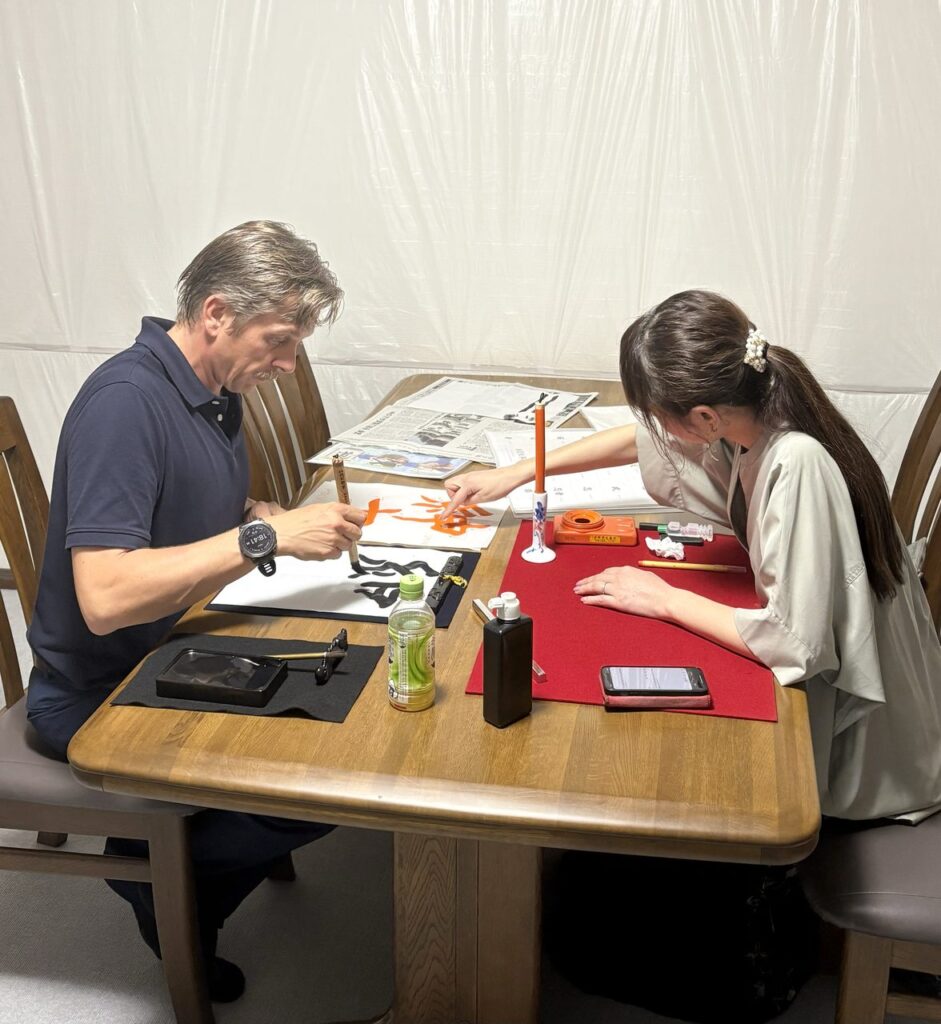
A session at our school in Fukuoka. UNESCO’s document notes that shodo is transmitted mostly through hands-on engagement.
評価機関は、登録基準R.1の評価として次のように書いています。「書道は主に実際に手を動かすことを通じて受け継がれており、学校のクラブ活動や、授業に組み込まれたかたちでも伝えられている。書家もまた、学校や書道教室で若い世代に伝統的な技術を伝えている」。
Under criterion R.1, the Evaluation Body wrote: “The practice is transmitted mostly through hands-on engagement, including through school clubs and lessons incorporated in school curricula. Calligraphers also transmit traditional techniques to younger generations in schools or Shodo classes.”
受け継がれ方
手を動かすこと、学校の授業・クラブ活動、そして書道教室。文字を書く行為そのものが継承の手段とされています。
Hands-on practice, school lessons and clubs, and calligraphy classes are named as the channels of transmission.
守り方
学校教育、地域団体による教室・展覧会・講演、そして行政の支援。日本では書道が「登録無形文化財」として位置づけられていることにも触れています。
Safeguarding combines formal education, community-led workshops and exhibitions, and government support. Shodo is recognised in Japan as a Registered Intangible Cultural Property.
つまり書道は、建物や遺跡のように「保存して守るもの」ではありません。書く人がいなくなれば、その日のうちに途切れてしまうものです。だからこそ、教室で筆を持つこと、旅先で一枚書いてみることが、そのまま継承につながっていきます。
Shodo is not a monument to be preserved behind glass. It is a living practice: if people stop writing, it stops. That is why picking up a brush — in a class, or once while travelling in Japan — is itself a part of keeping it alive.
5つの基準をすべて満たすと評価されたAll five criteria were met
代表一覧表への登録には、5つの基準(R.1〜R.5)すべてを満たす必要があります。評価機関は、書道の提案書がそのすべてを満たしていると評価しました。
Inscription on the Representative List requires all five criteria (R.1–R.5) to be satisfied. The Evaluation Body found that the shodo nomination met every one of them.
| R.1 | 表現の手段であると同時に、古典文学が書で表されることなどを通じて伝統文化を育んでいる。自然素材の道具を使うことで自然への敬意も育む。Shodo promotes traditional culture and respect for nature; it is transmitted through hands-on practice, schools and calligraphy classes. |
|---|---|
| R.2 | 登録されれば、手書きの書が生きた伝統であることを示し、無形文化遺産そのものの認知を高める。文化的対話を促す。Inscription would raise the visibility of living heritage and encourage cultural dialogue. |
| R.3 | 学校教育・地域の取り組み・行政の支援の組み合わせで保護されている。日本書道文化協会が状況を把握し、性別による制限のない形で保護を進めている。Safeguarding combines education, community initiatives and government support, monitored by the Japan Shodo Culture Association without gender-based restrictions. |
| R.4 | 提案は担い手自身の強い意志から始まった。関係団体が協議会を設立し、実践者・専門家が資料や映像を提供し、自由意思による事前同意を示した。The nomination was initiated by bearers themselves, with free, prior and informed consent. |
| R.5 | 2021年12月、文化庁が管理する日本の無形文化遺産の目録に記載済み。目録は毎年更新されている。Included in Japan’s national inventory in December 2021, updated annually. |
さらに評価機関は、決定案の最後に日本への称賛を書き添えています。「提出された提案書の質の高さを称賛する。これは今後の提案書作成にあたっての good practice(優れた実践例)となるものである」——審査する側から模範と評されたことは、あまり報じられていませんが特筆すべき点です。
The draft decision closes with a commendation: “Commends the State Party on the quality of the nomination file submitted, which serves as an example of good practice for the preparation of future nominations.” This praise from the evaluators themselves has gone largely unreported.
中国の「書法」は2009年に登録済みですChinese calligraphy was inscribed in 2009
「書は中国のものでは?」と思われた方もいるかもしれません。中国の「Chinese calligraphy(書法)」は2009年、第4回政府間委員会ですでに代表一覧表に登録されています。今回日本が提案したのは Shodo, calligraphy in Japan という別の案件で、両者は並び立つものです。
If you are wondering about China: “Chinese calligraphy” was inscribed on the Representative List back in 2009, at the fourth session of the Committee. What Japan has nominated is a separate element, Shodo, calligraphy in Japan. The two stand alongside each other rather than competing.
代表一覧表は優劣を競う順位表ではなく、人類が受け継いできた多様な文化を並べて記録していく仕組みです。ユネスコの説明文に「かな」がはっきり書かれていたことは、日本の書が独自に歩んできた道のりが文書の上でも示された、ということだと当教室は受け止めています。
The Representative List is not a ranking. It is a record of the diversity of living heritage. That UNESCO’s description names kana explicitly is, as we read it, an acknowledgement in writing of the path Japanese calligraphy has taken on its own.
登録されれば、日本で24件目Japan’s 24th inscribed element
文化庁の一覧では、2025年12月現在で日本の無形文化遺産は23件。書道が加われば24件目になります。直近に登録されたのは「伝統的酒造り」(2024年)で、そのほか「和食」(2013年)、「和紙」(2014年)、「風流踊」(2022年)などが登録されています。
As of December 2025, Japan had 23 elements on the Representative List, according to the Agency for Cultural Affairs. Shodo would be the 24th. The most recent addition was traditional sake brewing (2024), following washoku cuisine (2013), washi paper (2014) and furyu-odori dance (2022).
ニュースを、手で確かめてみませんかSee it for yourself — a calligraphy experience in Fukuoka
登録の知らせを受けて、書道を一度やってみたいと思われた方へ。裕虹書道教室では、福岡で外国人の方向けの書道体験を行っています。墨を磨るところから始めて、最後は自分の作品を持ち帰っていただく、約90分のプログラムです。
If this news makes you want to try it: Yuko Shodo offers a Japanese calligraphy experience for international visitors in Fukuoka. You start by grinding your own ink and finish about 90 minutes later with a piece of your own to take home.
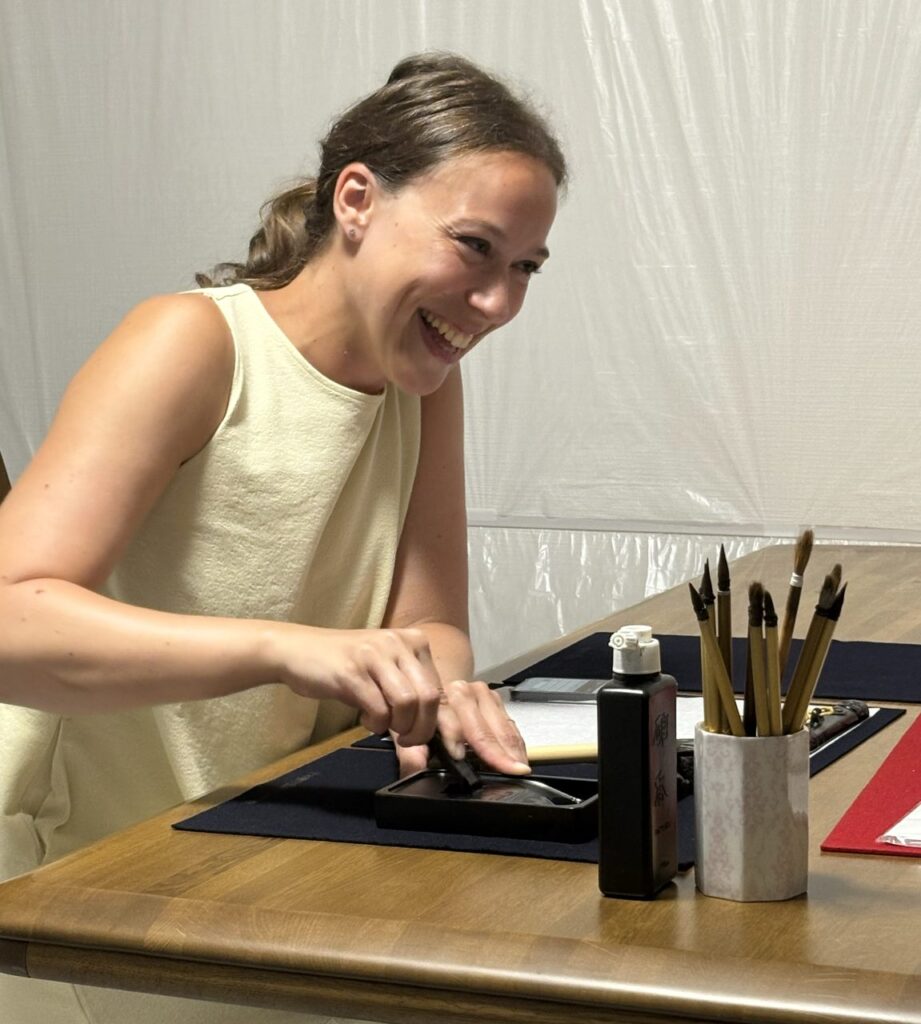

You start by grinding your own ink, and the finished piece goes home with you.
書道体験のご案内
Japanese Calligraphy Experience|Onojo City, Fukuoka
- 所要時間 約90分・1名様から・手ぶらでOKAbout 90 minutes. Available from one participant. All tools provided.
- 日本習字の最高段位を持つ女性講師が指導(在籍生徒 約100名)Taught by a female instructor holding the highest-level licence from Nihon Shuji, with around 100 students.
- 完全プライベート空間での実施Held in a fully private room.
- あなたにふさわしい漢字を一字お伝えしますWe will choose one kanji character that suits you, as a gift.
- 色紙・うちわ・扇子・だるま・風鈴・掛け軸から選んで作品にChoose your item: shikishi board, uchiwa or sensu fan, daruma doll, wind chime, or hanging scroll.
- 料金 1名様 10,000円(税込)〜From ¥10,000 (tax included) for one participant.
- 西鉄春日原駅から徒歩5分/博多駅・福岡空港から約30分5 minutes on foot from Nishitetsu Kasugabaru Station; about 30 minutes from Hakata Station or Fukuoka Airport.
福岡で、世界にひとつの一枚を。
体験の流れ・料金・ご予約方法は、専用ページでご案内しています。
Full details of the experience, pricing and how to book are on our dedicated page.
書道体験のページを見るView the Calligraphy Experience page メール・LINEでお問い合わせContact us by email or LINEよくある質問Frequently asked questions
もう「ユネスコ無形文化遺産に登録された」と言っていいですか?Can we already say shodo has been inscribed?
いいえ。2026年11月5日に出たのは評価機関の「勧告」で、正式な決定は12月1日〜3日の見通しです。それまでは「登録される見通し」「登録が勧告された」という表現が正確です。
Not yet. What was issued on 5 November 2026 was a recommendation by the Evaluation Body. The Intergovernmental Committee is expected to decide between 1 and 3 December 2026. Until then, “recommended for inscription” is the accurate wording.
ユネスコが対象にした「書道」には何が含まれますか?What does the nominated element cover?
漢字・かな・その両方を筆で紙に書く行為が中心で、印を彫るための図案を作る技術にも触れられています。書き初めや手紙、芳名帳への記帳、命名書といった、暮らしのなかの場面も例として挙げられています。
Handwriting in kanji, kana or both with traditional brushstrokes on paper, including the technique used for seal designs. The description also names everyday settings: New Year’s kakizome, letters, guestbooks and name certificates for newborns.
中国の書法とは別のものですか?Is this separate from Chinese calligraphy?
別の案件です。中国の「Chinese calligraphy」は2009年に登録済みで、今回日本が提案したのは「Shodo, calligraphy in Japan」です。代表一覧表は順位ではなく、それぞれの文化を並べて記録する仕組みです。
They are separate elements. “Chinese calligraphy” was inscribed in 2009; Japan’s nomination is “Shodo, calligraphy in Japan”. The Representative List records diversity rather than ranking traditions.
書道の経験がなくても体験できますか?Can complete beginners join the experience?
はい。筆の持ち方も姿勢も、講師がその場で手を添えてお伝えしますので、予習は必要ありません。道具はすべてご用意しています(手ぶらでOK)。墨で汚れる場合がありますので、汚れてもよい服装でお越しください。
Yes. Your instructor guides your hand directly — how to hold the brush, how to sit — so nothing needs to be learned in advance. All tools are provided. Please wear clothes you don’t mind getting ink on.
体験は何語で行われますか?What language is the experience conducted in?
ご案内は日本語ですが、翻訳アプリを併用しますので、日本語が分からなくても安心してご参加ください。筆の動かし方は実際にお見せしながらお伝えしますので、言葉が通じなくても体験は問題なく進みます。
The session is guided in Japanese, with a translation app to help us communicate, so you are very welcome even if you do not speak Japanese. Brush techniques are shown to you directly, so the experience flows smoothly regardless of language.
日本にお住まいの大人の方へFor adults living in Japan
「子どものころに習ったきり」という方からのお問い合わせが、このところ増えています。大人の部では、毛筆のほかペン字・筆ペンも学べます。土曜日は満席が続いていますが、平日の10時〜14時にはまだ空きがあります。お子さまが学校にいる時間、お仕事の前後の時間に、月に数回だけ筆を持つ——そんな通い方をされている方が多い時間帯です。
For readers living in Japan: our adult classes cover brush calligraphy as well as pen and brush-pen writing. Saturdays are currently full, but weekday slots between 10:00 and 14:00 are still open.
大人教室 大人の書道・ペン字コースのご案内(月謝・曜日・体験について) Adult classes: fees, schedule and trial lessons (in Japanese). あわせて読みたい 福岡で大人の書道教室を選ぶ5つのポイント|初心者・ペン字も How to choose an adult calligraphy school in Fukuoka (in Japanese).一枚書くことが、受け継ぐことになる。
ユネスコが担い手として挙げたのは、書く人と、教える人と、学ぶ人でした。
福岡・大野城市で、あなたの一枚をお待ちしています。
UNESCO names the bearers of shodo as those who write, those who teach, and those who learn.
We look forward to welcoming you in Onojo City, Fukuoka.
出典・参考|Sources
- 文化庁「『書道』のユネスコ無形文化遺産代表一覧表登録に関する評価機関による勧告」(令和8年11月5日)
https://www.bunka.go.jp/koho_hodo_oshirase/hodohappyo/94461801.html - UNESCO「Examination of nominations for inscription in 2026 on the Representative List」(LHE/26/21.COM/7.b、Draft Decision 21.COM 7.b.8)
https://ich.unesco.org/en/7b-representative-list-01447 - UNESCO「Chinese calligraphy」(2009年登録)
https://ich.unesco.org/en/RL/chinese-calligraphy-00216 - 文化庁「ユネスコ無形文化遺産」(代表一覧表に登録された我が国の無形文化遺産)
https://www.bunka.go.jp/seisaku/bunkazai/shokai/mukei_bunka_isan/ - UNESCO「Twenty-first session of the Intergovernmental Committee」(厦門・2026年11月30日〜12月5日)
https://ich.unesco.org/en/21com
2026年11月6日公開。政府間委員会の決定が出ましたら、この記事を更新します。
Published 6 November 2026. This article will be updated once the Intergovernmental Committee has decided.